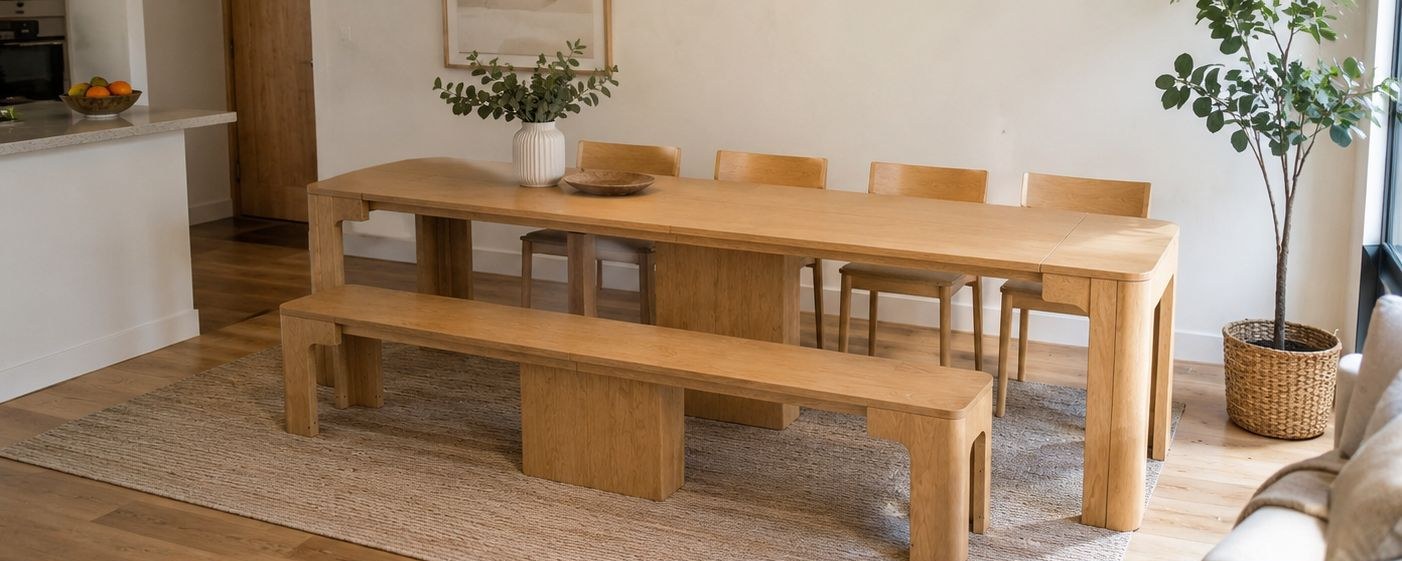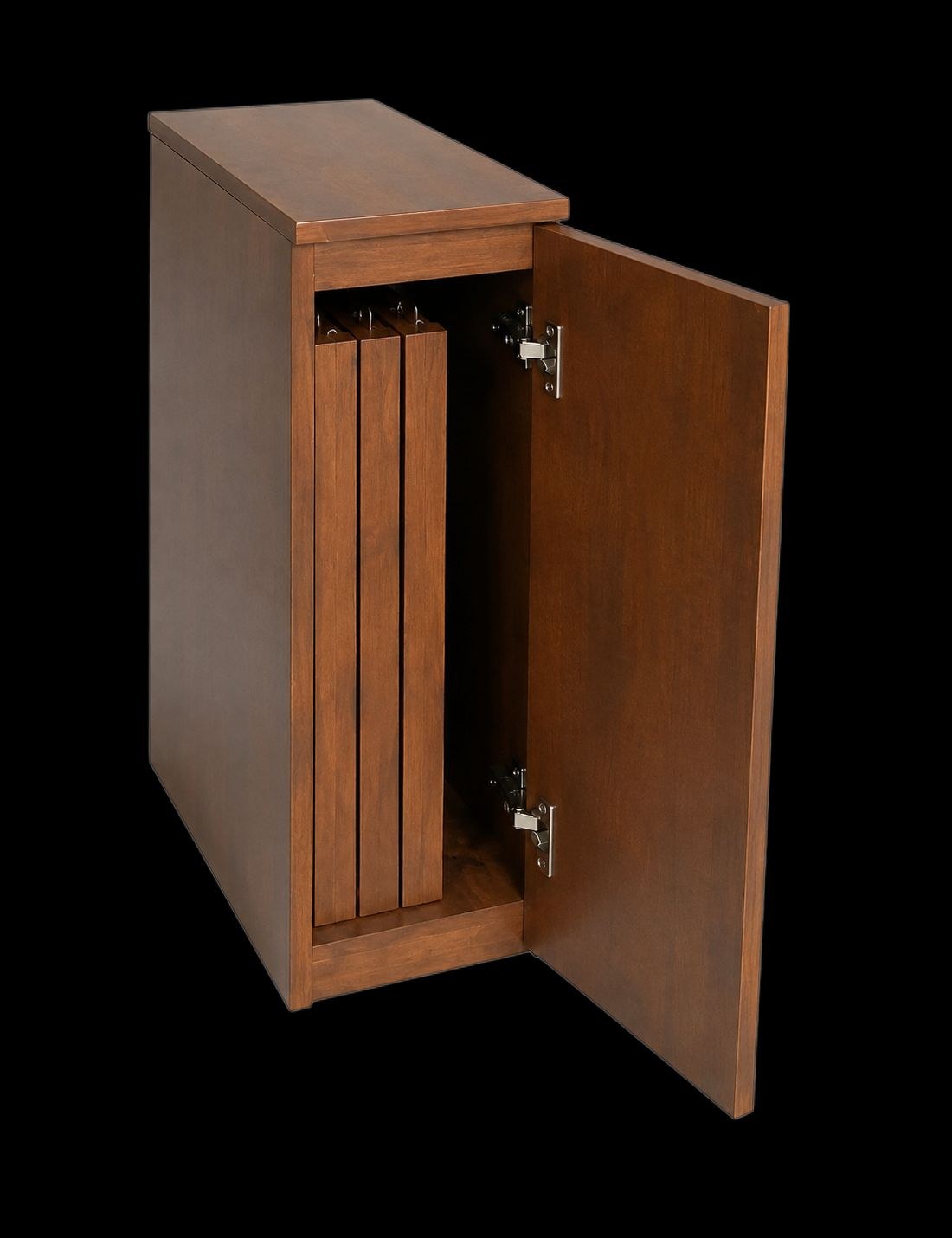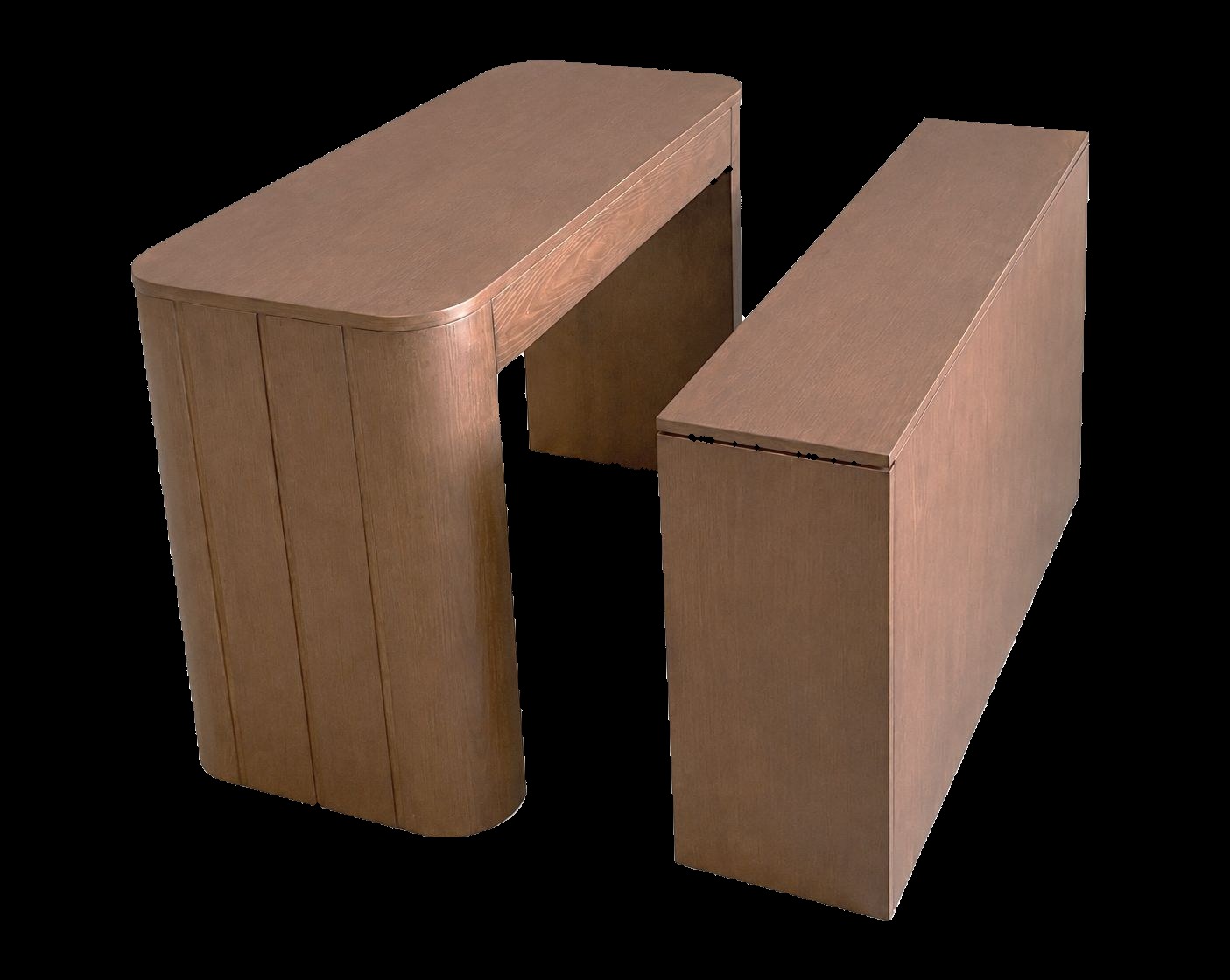
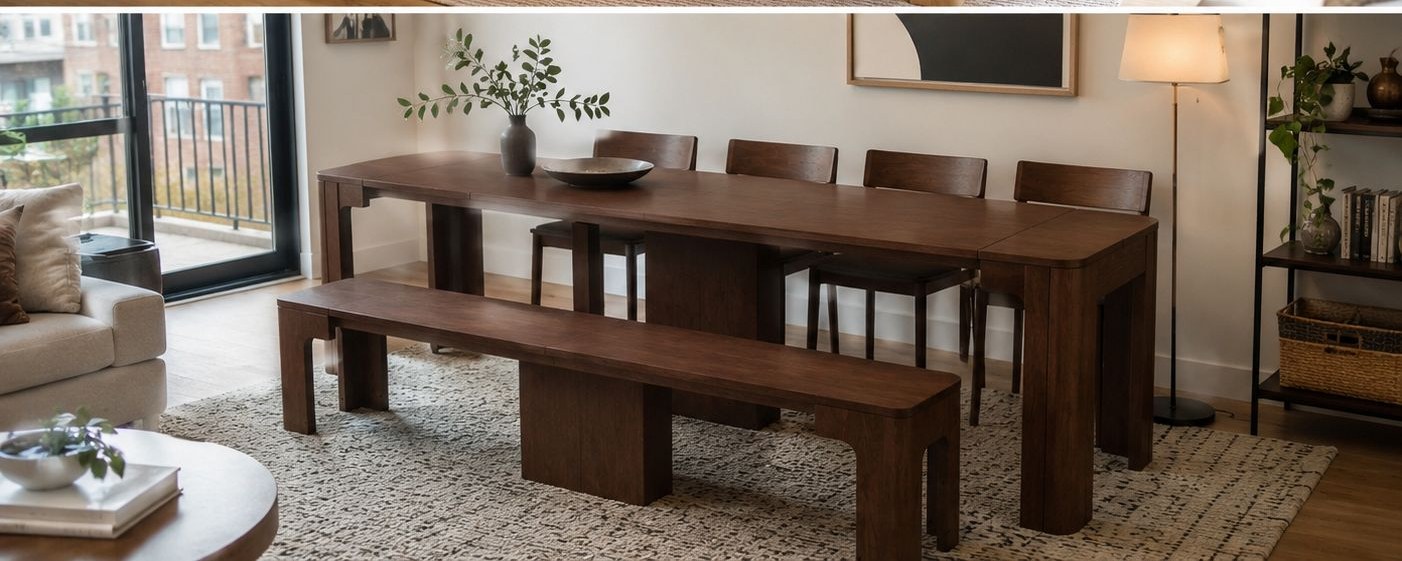
Every host with a small dining room has said some version of the same sentence: "I'd love to, but I don't really have the table for it." Usually that's true, right up until it isn't — right up until the table in question is one that only needs to be small most of the time.
Here's how to actually run the big nights once you've got the room for them.
Holiday dinners
The holiday table is the one that gets planned around months in advance, which means it's also the one where "we don't have the space" turns into someone eating off a card table in the living room. With a table that goes to 10 feet, the planning question changes from where will everyone sit to how many are actually coming, which is a much better problem to have.
A few things that make the long-table holiday dinner work in a room that's small the rest of the year: run the table lengthwise with the room's longest sightline, not its widest wall, so there's still a walking path on at least one side. Borrow chairs rather than buying a full set of twelve you'll store the other 350 days of the year — a bench that already seats four solves most of that math on its own. And light it low: candles and one dimmed overhead do more for a long table's feeling of occasion than a fully lit room ever will.
Game nights
A ten-foot table for a game night sounds like overkill until you've tried to play anything with more than four people around a coffee table. Board games, cards, the annual trivia night that always ends in an argument about the rules — all of it is better with elbow room and a hard surface. The table doesn't need a full formal setting for this one. Runner down the middle, snack bowls spaced out, good enough.
Birthday gatherings
The birthday table is the one that benefits most from the console-to-table range, because the guest list is rarely all-or-nothing. A birthday dinner for six doesn't need the full ten feet — extend halfway, and you've got an intimate table that still has room for a cake in the middle without anyone having to hold their plate on their lap.
The actual logistics of hosting ten in a small home
Table size solves the seating problem. It doesn't solve the rest, so a short, practical list:
- Seating math: four chairs plus a bench that seats four gets you to eight without buying a single extra chair; add two folding chairs at the ends for the last two.
- Serving: if the kitchen counter is close, use it as the buffet and keep the table for plates and glasses only — a ten-foot table covered in serving dishes leaves no room for people.
- Flow: open a path on at least one long side of the table before guests arrive. It's the difference between a dinner party and an obstacle course.
- After: the table doesn't need to live at ten feet until the last guest leaves. Collapsing it back down is as much a part of hosting in a small space as setting it up was.
The room doesn't get bigger for the night. The table just stops pretending it has to be small all the time.