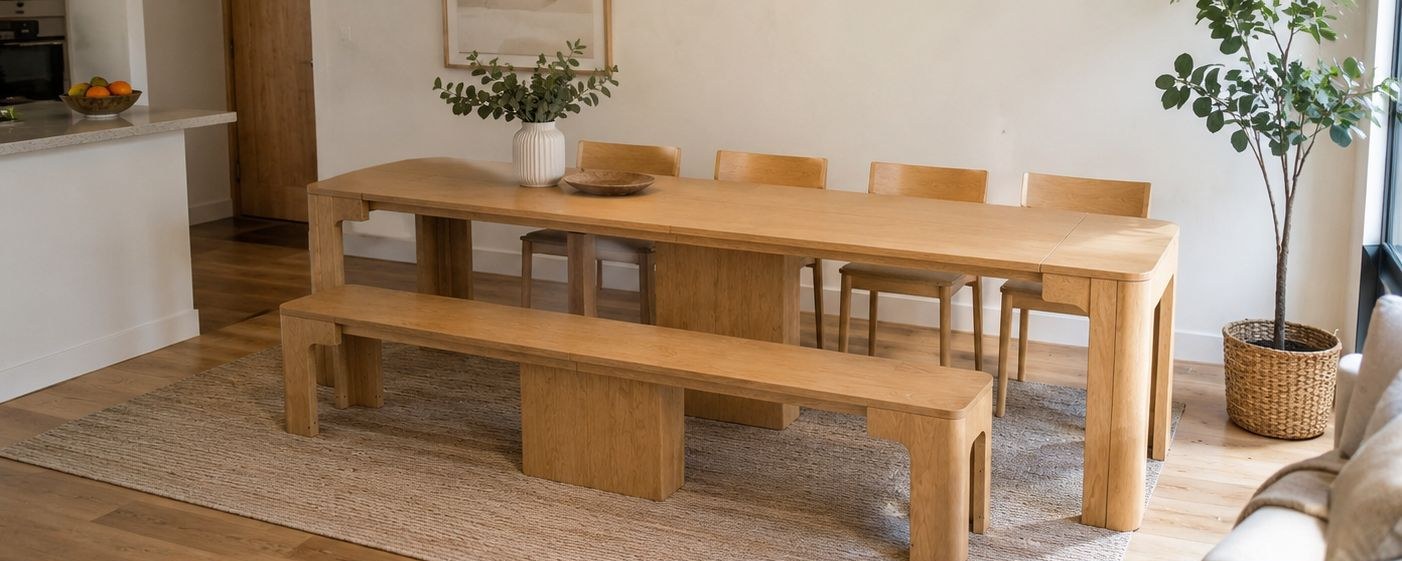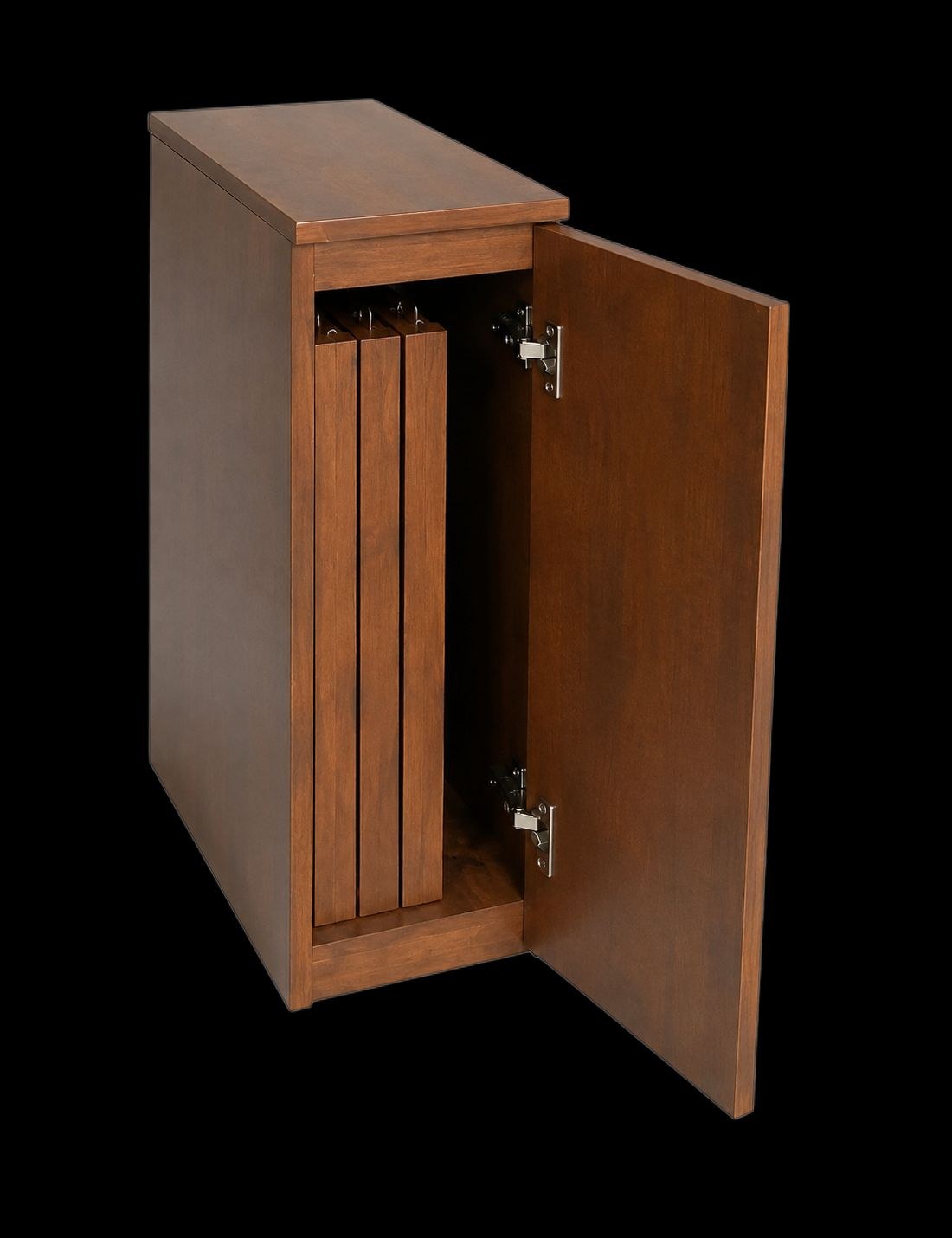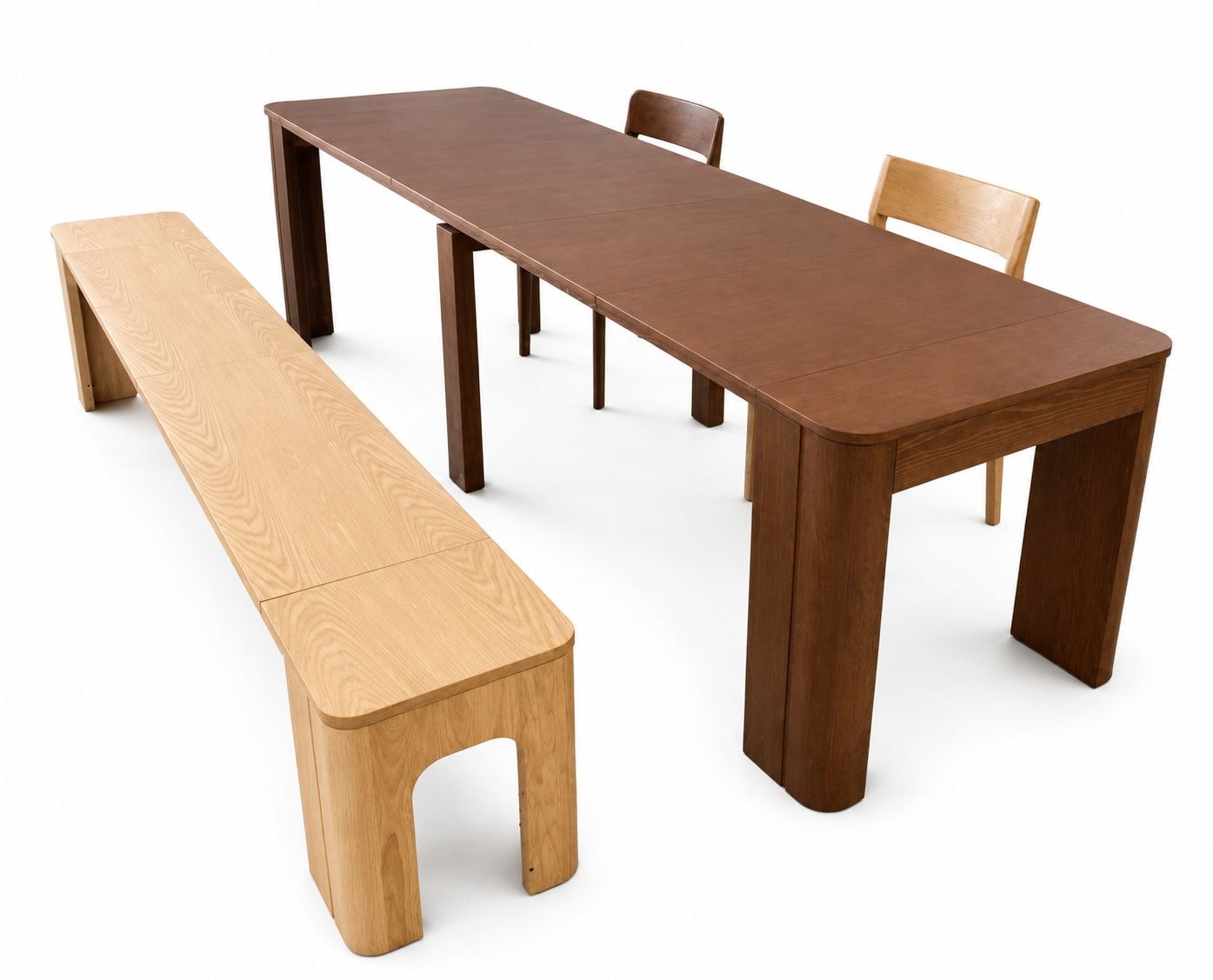
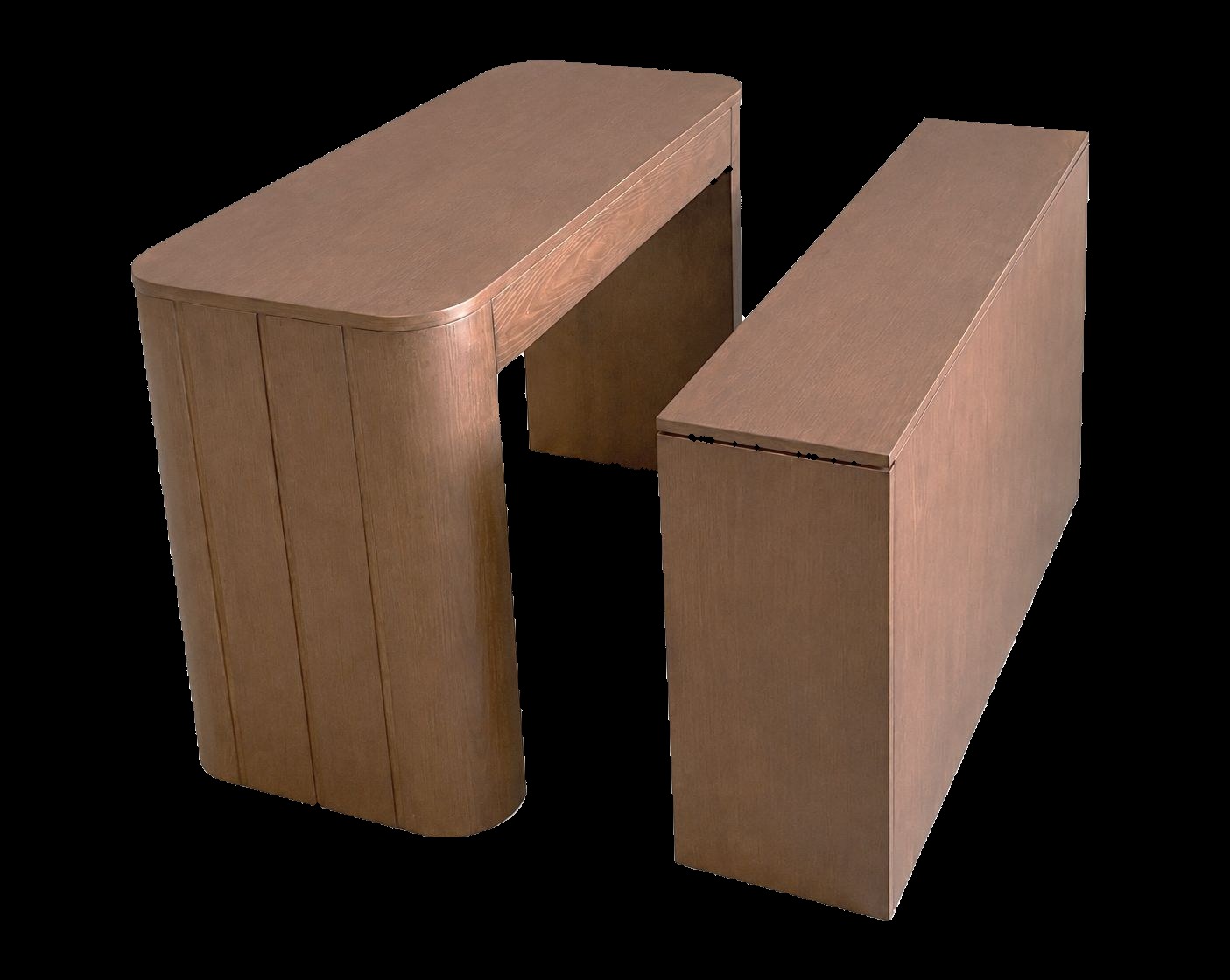
A table that changes size by 8 feet asks more of its materials than a table that just sits there. Every hinge, slide, and joint in EXTENDR has to survive not just weight, but repeated motion — hundreds of conversions over the table's life, each one needing to feel as easy as the first. That's the real argument for building it out of solid materials instead of cutting corners where nobody would notice at first glance.
Solid wood core
The core of the piece — the structural frame that everything else attaches to — is solid wood, not particleboard or MDF dressed up to look like it. This matters most at the joints and the mechanism itself, where a lesser material would flex, loosen, or strip out over years of folding and extending. Solid wood holds screws and hardware the way it did on day one, which is the entire difference between a table that still feels tight after five years and one that starts to wobble after five months.
Real wood veneer
The visible surface is a real wood veneer, not a printed laminate pretending to be wood grain. The difference shows up in the details a laminate can't fake: no two panels are identical, the grain runs naturally rather than repeating in an obvious pattern, and the surface ages the way real wood ages — developing a little more character, not peeling at the edges. It's also simply nicer to run a hand across, which matters more than it sounds like it should for a table people are going to touch every single day.
Solid metal hardware
This is the part that makes the 60-second conversion possible at all. The hinges, slides, and locking mechanisms are solid metal, sized to carry real weight through real repeated motion. Cheaper hardware is often the first thing to fail in a convertible piece — a plastic slide cracks, a thin hinge bends, and the "quick conversion" that sold you on the table in the first place turns into a two-person wrestling match within a year. Solid metal hardware is the quiet reason EXTENDR still converts in 60 seconds on year three the same way it did on day one.
Why this matters more than it sounds like it should
None of this is the part of the table anyone photographs. It's not the finish, it's not the silhouette, it's not the thing that sells someone in the first ten seconds of looking at it. But it's the difference between a table that's still doing this in five years and one that's been quietly retired to "console only" because the conversion got harder, or louder, or just started to feel like it wasn't built for this many uses. Smart value means the parts nobody sees have to be as considered as the parts everyone does.